February 12, 2024
Shopify Summer Editions 2023 Explained
Twice a year, Shopify releases what it refers to as ‘Editions’ - a winter version and a summer version - which detail the upcoming changes and innovations that the platform will be rolling out. While they tend to be quite… extensive (Shopify has been spending around a billion dollars a year in R&D), this latest is among the largest.

Hours of video, tens of thousands of words in help documents and dev documentation, and I’ve read and researched it all because, honestly, somebody had to. So, here we go, Summer Editions 2023, featuring all of the following and more:

TL;DR
I’m not even going to try to sugarcoat it, the following article is long, like multiple vowels looong, so for those of you who want to gather the good stuff straight away, without the accompanying deepdive, this section tackles the main themes of the latest Shopify Editions to help you get the information you need as quickly as we can give it to you.
- Customisation: despite the ease of the platform in general, ecommerce sites built with Shopify have tended to look more like Shopify than the brand the site represents (without extensive development work). Shopify seems to have acknowledged this and Summer Editions 2023 provides some announcements and reveals some new options and opportunities for brands to really make their site a true reflection of their brand. While many of these will primarily make things easier for a developer rather than for an owner/operator in control of building their own site, they are still big strides in the right direction.
- AI: it’s everywhere right now. If you work in any sector even tangentially connected to tech, you’ll be on the verge of tearing out your hair from the sheer volume of AI puff pieces. While its potential impact is huge, much of the coverage of AI and (more accurately) machine learning has been too optimistic of its immediate potential. Nevertheless, Shopify has thrown a lot of money into its AI offering and while I doubt the impact of its generative capabilities will be as huge as some expect, it’s in process automation that it will really aid merchants – and there was plenty of ML driven automation on offer throughout the sections.
- Improved native functionality: – it remains to see how app developers will react to Shopify stepping on toes (they’ve handled it pretty well, offering links to rival apps and by limiting functionality to the basics in each of the apps, leaving established players to cater to more complex needs), but one of the common themes throughout this Editions is the platform beginning to build out its native offering.
- Performance improvements: – one of the areas that has discouraged some of the more digital savvy brands transferring their business to Shopify has been the general speed and performance (load times, SEO performance etc.) of the platform. A lot of work has been done to tackle this over the last few years and this Editions is no different, with several entries on the improved performance of the platform out of the box and its ability to integrate with less of a performance penalty with various third parties.
- The platform for builders: – one of the things that has put Shopify above the competition for many merchants is the number and scope of app integrations available. This Editions stresses that, despite building some of their own alternatives, Shopify still strongly wants to be the ‘platform for builders’, and a raft of updates and API changes have been or will be implemented to allow app developers the opportunity to address pain points for merchants as the overall platform continues to evolve.
- Big Shop push: – Shopify’s one stop shop, Amazon-adjacent shopping app receives a number of updates to make it easier for merchants to incorporate it into their business. While it’s unlikely to challenge Amazon in the near future, building up its offering with independent businesses as those same businesses are undercut by Amazon branded alternatives to their products is a smart plan that could pay dividends in the long term – especially if Amazon eventually pushes its luck too far with one monopoly commission or another.
- B2B developments: – this Editions went big on B2B. We know from their marketing plans that it’s a big part of their growth plans for the future, but even so, the developments on offer tackle a huge number of the potential pitfalls of a Shopify B2B brand that even brands that hadn’t previously been operating (or even considering operating) in the space, may well end up with a wholesale business just due to the ease of setting it up.
- Social selling: – integrations are a big selling point of the Shopify platform, especially social integrations which often come first to Shopify well in advance of others. This Editions provides more announcements about improvements to the social selling possibilities on offer for merchants – especially with TikTok, which is rapidly becoming the most used social media platform.
- Omnichannel: – the social selling itself falls within another trend apparent in this latest release. Omnichannel was a buzzword a couple of years ago, but the interconnectivity and interoperability of various tools and platforms just wasn’t where it needed to be. This is changing with Shopify, who are rapidly building a toolkit that will allow their merchants to sell anywhere their customers are, both on and offline.
AI for Commerce
As you would no doubt expect, AI is front and centre of the latest Editions – it’s been clear from various actions of and business decisions made by the platform that there was an upcoming pivot to AI. In fact, the first confirmation of this pivot (I hate the word too, but apparently my vocabulary has atrophied due to exposure to jargon and I can no longer summon a synonym) was given 9 days prior to the release of Summer Editions 2023 on the 17th of July, when Tobi Lütke unveiled Sidekick, Shopify’s new “AI-powered assistant for merchants”.
idekick and generative AI
The assistant, which operates with a chat interface that will feel somewhat familiar to anyone that has dabbled with chatGPT, Bing’s OpenAI powered instance or Google’s Bard, will serve as an ‘always on’ helper for Shopify stores and help to improve efficiency and effectiveness across a range of tasks from basic content generation to customer interaction, from idea generation to interrogation of store analytic.
The AI section of the announcement, which deals with Sidekick, is split into 9 sections which are:
- AI designed for commerce: – this provides an overview of some of the capabilities of Sidekick, showing email design and customisation, text generation (including subject lines), ‘instant answers’ to speed up dealing with incoming queries, and some aspects of its page design ability.
- Every hero deserves a Sidekick: – this features the Lütke fronted announcement video that showcases further abilities – including the ability to suggest apps, interrogate analytics and search and query the Shopify Help documentation.
- Generate text in the Online Store Editor with AI: – this links out to a landing page that offers users the opportunity to sign up for early access to Shopify’s new generative AI toolkit.
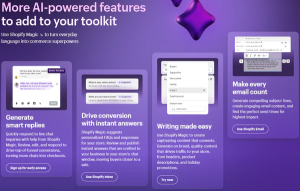
- AI-generated email subject lines, body copy, and optimized send times: – this card goes into a little more detail about the AI powered options available immediately with the Shopify Email app.
- Create blogs faster: – linked to the same landing page mentioned above, this promises that Shopify customers can “[…]enter a topic, choose the tone, and generate long-form blog content that drives traffic to your store in seconds with Shopify Magic.”
- Manage incoming chats more easily with AI-generated responses: – this card deals with the ability of Shopify Magic to enable users to “quickly respond to live chat inquiries with AI-generated responses”.
- Get guided help with our AI-powered assistant: – this card essentially informs users of the ease of using AI to query Shopify’s Help Center.
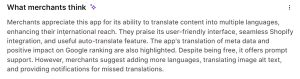
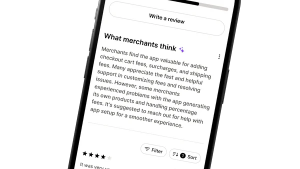
- AI-powered review summaries: – this card, which links to an example page (image below) talks about how Shopify customers will benefit from the app store using one of the most useful aspects of any LLM to summarise large amounts of information with the overall response to an app from all reviews now summarised in a ‘what merchants think’ paragraph.
- Save time with AI-generated FAQs: – linking to a page on the Shopify help sub-domain, this card refers to their assistant’s ability to “generate suggestions for instant answers. Automatically generated suggestions for instant answers are based on your store policies and conversation history.”
World’s Best Checkout
Back in May of this year, Shopify released the results of a study performed in partnership with what they refer to as a ‘Big Three global management consulting company’ (meaning either McKinsey, Boston Consulting Group or Bain & Company) which found that:
After months of independent study, this leading global management consulting company found that Shopify’s overall conversion rate outpaces the competition by up to 36% and by an average of 15%.
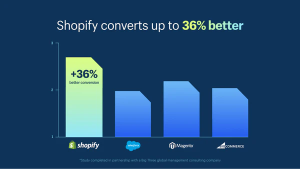
- 15% higher conversion on average over other leading commerce platforms: – this draws visitor attention and links to the results of the study mentioned above, but also bullet points a few other things (the benefits of Shop Pay from the same study, new customisation features and the speed and performance of the default checkout).
- Stellar Eats increases conversions by 3.5% switching to Shopify’s one-page checkout: – the second card is a link to a case study on a health-food brand that improved conversions, reduced abandoned carts and generally reduced friction in the checkout process.
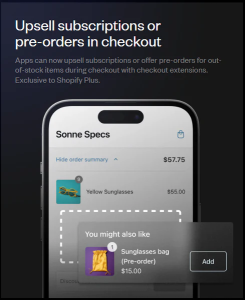
- Upsell subscriptions or pre-orders in checkout: – this is potentially one of the most impactful of the checkout updates, though it currently links only to the applyCartLinesChange section of the checkout API as it seems to suggest a common app functionality will be a native Shopify option in the near future (which can potentially reduce third party scripts).
- Address validation in checkout: – again linking to the checkout API page, this card talks about a new Shipping Address Update API which can suggest and correct a buyer’s shipping address, preventing unnecessary issues with delivery. This is another feature that has been historically handled by apps that will now be a native feature.
- Extend your checkout with apps: – this, again, has some real potential for both Shopify and the brands that use the platform. This change allows for better customisation of the checkout process for specific brand needs, but also represents a boon for the app ecosystem which, for the purposes of this announcement are split into three categories:
- Checkout UI extensions: – allow brands to better integrate apps that handle loyalty points, product offers, information banners, custom fields and more.
- Shopify functions: – apps which deal with custom discounts, bundling and post purchase upsells and payment rules.
- Web pixels: – apps which better enable you to collect first party data on customer interactions (a really useful addition given the upcoming end of 3rd party cookies).
- Customised delivery methods: – another API link here, this time showing where in the API you can look to implement what Shopify refers to as: “apps that customize delivery options like pickup dates, times, and instructions with ready-made UI components and new extension points.” This feature is only available to Shopify Plus merchants.
- Enhanced checkout editor: – again only available to Shopify Plus merchants, this is a new extension that will allow developers to one page checkout, thank you page and customer account pages directly from the checkout editor. You can find out how to test this here.
- Cart Transform Function now in full release: – this represents another usually app reliant functionality becoming a native Shopify Plus offering. You’ll now be able to merge and expand cart line items and build custom product bundles without the need for an app, again potentially saving valuable load time. You can find more about that capability here.
- Custom fonts for your checkout: – if there has historically been a stumbling block for brands with a tight control of their branding using the Shopify platform it has been the requirement for sites to be more easily identifiable as Shopify than as the individual merchant. This changes with the latest update as Shopify Plus merchants are to be able to use custom fonts (but also much more in what they’re referring to as advanced checkout branding) to ensure your checkout process is as recognisably you as the goods you sell.
- Server-side validations in cart and checkout now in full release: – developers working on Shopify Plus stores are now able to offer custom apps with server-side validation logic for cart and checkout. Whether that’s age verification, B2B min-max volumes or credit limits, quantity limits for sales and a host of other business rules with a new Shopify Function API.
Sell to Every Customer
Not satisfied with owning in excess of 10% of the global ecommerce platform market, Shopify is coming for IRL and B2B commerce. Stating, in this latest release, that:
It’s easy to see the business sense – it’s often easier to expand horizontally rather than vertically, so Shopify’s purchase of a B2B commerce provider Handshake in the middle of 2019 was no big surprise. However, what often causes issues with horizontal expansion is that brands often aren’t prepared for the additional strains caused by stepping out of their comfort zone.
This doesn’t seem to be the case for Shopify, however, and the 2023 Summer Editions provides a feast of new products, functions and services to make its move into these new areas of commerce a much more seamless experience for its customers.
- Tailor your store for B2B and international audiences: – you can now adapt your store content and layout for the various regions your brand operates in, and also for B2B. You can find more information about these new markets here, but the long and short of it is that you can now serve the same site in different ways to customers in different territories or who will buy from you in different ways – provided your store has been built with an OS2.0 (Shopify 2.0) theme.
- Preview sections and draft content in Online Store editor: – bringing Shopify in line with some of the most popular CMSs, Shopify merchants will now be able to preview new pages, products and blog posts before they are published. You can find more information on their dedicated theme editing info page, but suffice to say this will be a welcome update for brands and agencies in charge of adding new content to a site.
- Drag and drop to create custom layouts with flex sections: – set to debut later in the year, a new addition to theme editing is a WYSIWYG drag and drop editor that fits into a general theme of this Editions release – the vastly improved capacity for brands to create a site that is unique to them.
- Easily change your site’s colour schemes: – another nice customisation feature for Shopify merchants at the DIY stage of their business, new colour schemes allow for quick and easy changes to free Shopify themes.
- Custom landing pages powered by meta objects: – this is an excellent new feature and will doubtless come in handy for most industries, allowing you to create custom page templates for different meta-object types (the video below gives the example of an ingredient page and specific influencer pages, but there are dozens of potentially useful applications). In addition to the video, there’s an explainer page
here.
- Build engaging, conversion-driving shopping experiences: – another set of options to help your site stand out from the competition, this addition, linked to the version 10.0.0 release notes, details new animations for scroll and hover, the ability to define five or more colour schemes for sections of your site and also to change the shape of product images. These are flourishes, however, and should be treated as such – there is a reason the websites of the 90s are historical curiosities and not providing style tips to modern developers.
- Shopify Bundles app now in full release: – yet another app function becomes native as Shopify releases a free Shopify Bundles app. Although it’s almost certainly behind current premium apps (a theory that seems to be borne out by its current reviews), this does represent a potential cost and load speed saving for brands that require a more basic bundle functionality – or those that can’t afford the time or money it would cost to build out more complex bundles using the API.
- Offer subscriptions with Shopify: – another newly native app function, this time subscriptions – though as with the previous ‘bundles’ app, there is likely a lot of difference between a specially developed subscription app and this feature. In fact, the announcement makes this apparent when saying merchants will be able to “set up and manage simple [emphasis mine] subscription offerings with the new, free Shopify Subscriptions app”.
- Theme header customizations that drive conversion: – this returns us to the ‘customisation’ theme of the Summer Editions, as Shopify announces a series of customisation options for the header and announcement bar of your site. This specific card (which also links out to a help centre section on adding an announcement bar) offers three examples:
- Announcement bar: – you can now add social media icons, language and currency pickers, and an auto-rotating slider to display multiple announcements.
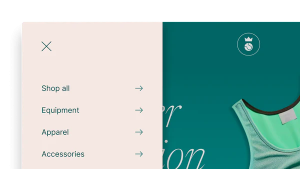
- Header: – you can now use a collapsed menu layout and also have the ability to apply multiple colour schemes to the menu.
- Conversion-driving apps: – you can now add wishlist or loyalty program apps to your header, displaying them beside your cart.
- APIs to support more than 100 product variants: – though not yet released, this will be a welcome announcement to merchants with complex inventory. At the moment, an item with 10 sizes in 10 colours would be enough to max out your variant limit, but Shopify promises here an upcoming developer preview of this new capacity “to help establish a new foundation for merchandising on Shopify.”
- Local pickup now available in draft orders: – a nice simple addition (to explain if not to implement), you can now offer a “local pickup” option for shipping in draft orders which can “drive more traffic to your retail stores, and give your customers more flexibility”.
- Online stores now load even faster around the world: – you can read all about the changes on the Shopify blog, but the headline here is that a mix of infrastructure and platform performance improvements have led to a 30% increase in the speed of Shopify stores – something which has definitely needed work for a while. One of the most interesting things here is intelligent lazy loading which allows developers to overcome problems caused by setting a component to either lazy load or not as standard (components as discussed often here, are for everywhere now). Instead of relying on a default setting or on a toggle for lazy loading, devs can now set a section.index rule which will take the component’s position on the page into consideration and assign the attribute only to components occurring after a nominated section number.
- Manage your listings on the top marketplaces, all in one place: – merchants will now be able to use the Shopify Marketplace Connect app to connect their product catalogues to the world’s leading marketplaces (Amazon, Walmart, eBay, Etsy) and manage your marketplace listings, inventory, orders, and fulfilment within Shopify – including setting marketplace-specific content and pricing overrides.
- More ways to customize filters and product recommendations in large catalogs: – seemingly addressing many of the app’s negative reviews, Shopify has updated their Search & Discovery app to allow for the grouping of filter values (“aqua” and “teal” as “blue” is the example given) and for the renaming of filters (displaying “tags” as “features” for example).
- Enhanced management tools for retail staffing: – perhaps more useful for merchants that maintain physical stores, this announcement dates back to May and allows for better tracking and analysis of staff sales performance.
- Power of dynamic storefronts, at the speed of static: – while I haven’t seen this in action, it has the potential to radically improve performance for retailers that provide any kind of account based personalisation, and may incentivise other merchants to begin offering such personalisation. Dynamic, personalised experiences have the potential to provide a much improved UX and conversion rate, but have historically resulted in longer load times (which can be detrimental to UX and conversion rate). Overcoming common issues with such a technique could be hugely beneficial to merchants and users alike.
- Speed up key inventory workflows: – whether you occasionally run a pop-up store, or a chain of brick and mortar stores, Shopify is doing its best to ensure that its POS (point of sale) offering has the same low bar to entry as its online platform. This specific card provides information on four new developments:
- Variant metafields in POS: – variant metafields such as size, colour, or material will now display in POS, allowing merchants to share additional product details with customers.
- Oversell confirmation: – items that are not available, when added to a cart, will display an oversell confirmation.
- Redesigned product detail page: – product detail pages have been redesigned to make them easier to search.
- Streamlined product variant list: – product variant lists have been streamlined to make it faster to look up inventory.

- New devices for in-person selling in Canada: – this card simply announces that the POS Go and WisePad 3 are now available in Canada. merchants can find more information on Shopify’s hardware page.
- Accept all EFTPOS payments with POS in Australia: – similarly, this card announces improvements to payment options for Australian POS users.
- Give in-store customers more ways to pay with Shop Pay Installments on POS: – stepping on some toes at Klarna and similar companies, Shopify have announced, in partnership with Affirm (formerly an exclusive BNPL partner of Amazon in the US) to offer payment instalments on POS that, according to its product page, can improve AOV by 50% and reduce abandoned carts by 28%.
- Build new POS workflows with Smart Grid and modal extensions: – from an announcement at the beginning of May this year, developers can now extend the functionality of POS with apps “that solve unique in-person retail needs or address specific omnichannel tasks”.
App Development
It may seem odd for this section to feature so prominently given the number of times I’ve mentioned Shopify releasing a native version of some of the biggest apps on the platform during this Editions, but the intention here seems to be to power a kind of ‘next-gen’ kind of application – something that will go above and beyond the loyalty, CRO and bundling apps that have been prevalent.
The summary paragraph for this section speaks to this somewhat:
In one regard, they’re trying to lower the barrier to entry for new app developers, while in another they’re again pushing for new ways to customise Shopify stores to create unique brand experiences.
This bodes well for businesses that have historically run several apps, offering greater facility for integration with the platform – but it must feel a little like a bait and switch for businesses that have been built around a single app which now faces competition from Shopify itself.
- More powerful ways to extend Shopify’s backend logic: – this ties in with several of the checkout customisation developments discussed recently, but it does seem to offer the promise of more, with the update providing plenty of opportunity to go above and beyond the applications listed in the video from back in March.
- 9 Function APIs are now available, including the new Custom Order Routing Function: – these APIs allow you to extend Shopify’s functionality and build custom features.
- JavaScript support for Shopify Functions is now in full release.
- Functions can now be versioned and rolled back with your app: – allowing you to track changes and revert to a previous version if necessary.
- Functions can now be developed locally and debugged faster: – developers can use the ‘shopify app dev’ command to run functions in a local dev environment.
- App-owned metafields are now supported: – allowing you to create and manage metafields specific to your app.
- More cart data fields are now available in Shopify Functions: – allowing you to build custom features for cart abandonment prevention, dynamic pricing and much more.
- Easily build Shopify apps with the new Remix app template: – linking off to a ‘get started’ page of their developer documentation, this announcement gets to the heart of the previously mentioned desire to lower the barrier for app developers to create apps for Shopify’s ecosystem – making the following promise which makes it feel like even I should be able to throw an app together:Now building an app has never been simpler. Authentication is just a function call. GraphQL is just a function you get after you authenticate. Webhooks are just a route. Everything is fast, and everything is idiomatic Remix.
- Over $1.5 billion: – this may not be hugely comforting to apps about to lose market share to Shopify, but this card announces that one and a half billion is the current earnings total of developers from the Shopify App Store, and Shopify “couldn’t be more proud of the developers growing their businesses on Shopify” (insert grimacing emoji).
- New resources for creating beautiful apps: – a further swathe of additions to app design guidelines and a beta release of Polaris v12 will help to make it a little easier for designers and developers to produce apps with better UI and UX and a look and feel that instantly inspires confidence.
- More ways to get your app discovered and installed: – apps that achieve ‘Built for Shopify’ status will now have special badges and promotional placements in the App Store.
- App versioning and unified deployment: – linking to a dedicated dev documentation page which compares the old individual deployment to the new ‘simplified deployment’ as a diamond pickaxe to a stone pickaxe (in a reference I only get because of enthusiastically Minecraft devoted children), this new “simplified deployment model, [means] all of your extensions are versioned together” allowing you to deploy all with a single command.
- An enhanced developer onboarding experience: – this card reveals that new partner accounts will be pre-populated with sample data to allow for an immediate start on new projects, while there has also been an update to the layout of structured tutorials to enhance learning.
- Metafields perform up to 4X faster: – metafields have played a big part in a few of Shopify’s recent updates, and are allowing developers the freedom to provide unique, customisable experiences to users. This card emphasises the improved performance of metafields, stating: “Adding custom data is now even faster with improved metafield GraphQL execution times in the Admin API.”
The Shop Channel
Shopify’s Shop App – a one stop platform providing more direct competition to the Amazon and other marketplaces – is also benefiting from the themes of this Editions, with AI and customisation at the heart of the updates.
With Amazon recently announcing a ‘buy with Prime’ app for Shopify, and improved integration between Shopify and other third party marketplaces, merchants will be delighted to see a greater level of integration with two of the largest global ecommerce platforms, combining with a host of new features to make Shopify Shop a much more exciting option.
- Optimize your Shop Store for millions of mobile shoppers: – linking to help documentation to help you set-up your Shop Store channel, this card reflects Shopify’s desire to improve uptake of Shop Store channels by retailers, emphasising the customisation options available to merchants and the potentially huge new audience that can be reached via the app. Stores will still need to meet eligibility criteria, but these are not especially arduous compared to the potential impact.
- Convert new customers in no time with risk-free campaigns: – currently only available in the US, Shop Cash offers allow merchants to set a desired CPA and reward potential customers with Shop Cash (in-app currency) when using Shop Pay at checkout. Shopify states that merchants have enjoyed up to a 43% increase in new customers and a 21% increase in 14-day repurchase rates.
- Supercharge engagement with Shop Minis: – enhancements for your Shop Store, Shop Minis are Shopify’s collective name for a variety of features (live-streams, shoppable videos, quizzes etc.) which are added by one or more partner apps from the app store. These features capitalise on trends toward (apologies for using the term) ‘snackable content’ – think TikTok videos, Facebook quizzes and the like – in order to capture the attention of potential customers.
- Amplify customer reviews across channels: – you can now syndicate reviews from Shop across channels, including your online store, Facebook and plenty more, and vice versa to your store with app partners like Judge.me and Okendo. Despite issues with fake reviews, they still represent an excellent form of social proof and are an excellent form of social proof.
- Engage your target audience with AI and tailored discovery: – this plays into a broader trend and a prediction I’ve made elsewhere online, that of the AI concierge or valet in the old English sense (a gentleman’s gentleman c.f. Jeeves of Jeeves and Wooster) which would learn your likes and dislikes and begin to slowly tailor your shopping experience to meet your specific needs. While we’ve got some way to go before that happens, this is a baby-step in such a direction.
- KITSCH finds new customers and a low-lift acquisition channel: – this is a case study rather than any kind of announcement, although it does offer some impressive figures from a Shop Cash offers program, including a 28% uplift of ROAS and a 32% improvement in 14-day repurchase rate compared to their online store.
- Build immersive experiences for the Shop app: – another card here deals with Shop Minis – this time the changes to the SDK and ease of access to it, allowing you to ‘build for a new era of mobile commerce’ according to the landing page. Although it doesn’t provide a tremendous amount of detail beyond that in the ‘supercharge engagement’ card, it does have some more examples on the landing page to give you more of an idea of their appearance in the app itself.
- Optimize your sign-up flow to increase conversion rates at checkout: – this card essentially gives a little detail on a ‘sign-in with Shop’ process and a similar lead capture option that should help to remove some friction from new customer sign-ups through integration with the broader Shop platform (and through Klaviyo for SMS opt-in).
Full-Stack Marketing
One of the major selling points of Shopify as a platform is how well and how quickly it integrates with third party platforms and software – and this section of the Summer Editions makes clear that Shopify remains committed to such integrations.
However, it’s not just social selling and app integrations that make up the full-stack marketing section, there’s also improved GA4 access and improvements to various tracking and segmentation options, which should help to reduce ad spend, improve results and help to increase the depth of data available to merchants and marketers.
This makes a lot of sense following the considerable investment Shopify made in analytics platform Triple Whale and the emphasis in this particular Editions on becoming ‘the platform for builders’. There’s been a lot of hype over the last few years on ‘omnichannel commerce’ without a tremendous amount of end product – each social platform has made some progress, but there have been few useful integrations – but the updates announced here appear to be taking big strides to make omnichannel a real possibility for brands of all sizes.
-
- Reach more customers and boost sales with connected marketing tools: – linking to an extensive page on Shopify Marketing Tools, the overall message seems to be that big things are coming to the native Shopify analytics offering. The page itself, for example, lists the following:
- Complete view of all your data: merchants will be able to analyse all data in one secure, central spot.
- Powerful personalization: merchants will be able to get more granular with data and create personalised marketing strategies.
- Actionable reporting: merchants will be able to instantly view performance metrics to help make better decisions.
- Access new insights to improve your marketing campaigns: – more improvements to native analytics are announced on this card, with updates to how Shopify collects data from UTM parameters, its activity report and also its attribution modelling (which will be interesting to compare with GA4s new attribution models).
- Collabs Network lets creators instantly sell your products: – Linking off to the (relatively poorly rated) Shopify Collabs app, this card details some much needed improvements to the app. These include:
- Instant selling: which allows you to opt in to let verified creators sell your products at a commission rate you set.
- Direct invites: helps to get creators you already have a relationship with selling quickly.
- Subscriptions API: means Collabs now integrates with the Subscriptions API, so creators can promote your subscription products.
- Automations: allows you to automatically pay affiliates through your Shopify bill.
- Reach more customers and boost sales with connected marketing tools: – linking to an extensive page on Shopify Marketing Tools, the overall message seems to be that big things are coming to the native Shopify analytics offering. The page itself, for example, lists the following:
- Multiple forms on your store with custom fields: – launched in November of 2022, the Shopify Forms app is given a bit of a shout-out here (no doubt partly because of the upcoming ‘cookie-geddon’ increasing the importance of first party data) and while its rating falls a fair way below those of Klaviyo, for example, it will likely play a significant role in some basic Shopify merchant’s efforts to retain some first party data and begin taking steps toward creating and implementing an email marketing strategy.
- Sweet success with Laurie Ellen and Shopify Marketing Tools: – another case study here, this time on the use of Shopify Marketing Tools with a quote from the merchant which runs: “I’m working on some financial projections and more business-related stuff. And even though it’s not information I’ve saved myself, I have it all there,” she says. “It’s this wealth of information, which is really important.”
- Improved attribution for affiliate links on Hydrogen stores: – an update for Shopify’s headless offering, Hydrogen, will now allow for the setting up of personalised affiliate links for use in conjunction with the Collabs app.
- New segmentation filters: – allowing you to target specific segments with discounts and promotions, this card represents another improvement to the way data is handled and analysed using Shopify’s native analytics offering. Linking to a dedicated explanatory page, Shopify provides the following three points:
- Endless possibilities: an unlimited number of customisable audience groupings.
- Dynamically updated: segments will automatically update as you add new customers, or as information changes over time.
- Inspire trust: you can now look to strengthen customer relationships with GDPR and CCPA compliant tools to capture marketing consent.
- Custom email templates and high-volume pricing: – this card comes at a sort of sweet spot of a few of the themes of this Editions, with elements of improved customisation, automation, easier integration and access to Shopify’s phenomenal checkout all featuring on the linked to page as it addresses improved email marketing functionality.
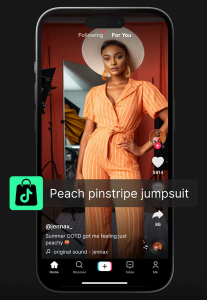
- Easily sync and sell your products on TikTok: – not yet fully released, but with the option to sign up for more information and for early access, this represents further integration with TikTok and specifically with its ecommerce offering. While its future is still less certain than other counterparts, such as Meta and whatever Twitter ends up being called, due to ByteDance’s ties with the government of the PRC, TikTok is a juggernaut that has been variously reported as having overtaken both Instagram and YouTube for daily minutes per user. This, combined with its almost unrivalled access to choice demographics, makes it a smart investment both for Shopify and for appropriate merchants.
- Segmentation for apps: – more segmentation options, this time for app-created metafields. Again, not currently available, but you can sign up for early access.
- Search your customer chats: – 70% of all conversations in Shopify Inbox are with customers making a purchase decision, so says the linked page from this card and now, with a sprinkling of AI classification and improved data visibility, you can manage your conversations with an eye on the bottom line.
- Cut customer acquisition cost by up to 50%: – first announced back in July, this is a powerful new tool for any brand using paid media as part of their digital strategy. As the tech giants become less transparent with their targeting, Shopify Audiences can help you reclaim some of the budget you lose to irrelevant audiences, decreasing new customer acquisition by up to 50% according to Shopify’s research.
- New automation templates and partner integrations: – another app functionality becoming a native offering here and while larger brands will no doubt prefer to continue with Klaviyo for their email automation, it does offer a powerful opportunity to merchants new to Shopify or to the process of automated email tracks.
- New Shopify-exclusive product drops on YouTube: – while the Google app has been around for about five years, the additional option to integrate with YouTube Shorts is an interesting option if you already have the app installed for connection to Merchant Center. If not, there’ll need to be a judgement call on the load speed cost of a Google app (they really aren’t the best, unfortunately, despite being one of the main drivers behind the industry wide performance obsession).
- Pixel updates, including cart views, discount used, and checkout progression events: – another nice update for first party data collection here, this time by building out the number of events that can be measured natively, helping merchants to get a better understanding of the customer journey and, hopefully, to optimise that journey for a better conversion rate.
- Keep a copy of order-related transactional emails: – having never needed to, I can’t say how much of a difference this will make on a day-to-day basis, but it would certainly seem to have use-cases for record keeping, complaint handling and general customer service. It doesn’t seem to be the most exciting of the updates announced in the Summer Editions, but it should at least be a functional improvement.
- Visually rich product imagery with Google AI: – not yet released, but with the option to sign up for early access, this promises to allow users the chance to create or enrich product imagery with AI in the previously mentioned Google & YouTube app. Although it may be interesting to see what the latest Google advances in generative imagery have been, there are dozens of apps already offering merchants the chance to enhance their product images. Again, there will be a performance conversation to be had as to whether the app’s offerings are better than the others on offer.
- Improved analysis with Google Analytics 4: – GA4 integration with Shopify, as someone who did a fair few in the early days after the announcement of the old GA’s deprecation, was what is technically referred to as ‘a pain in the bum’, so it’s nice that there’s now a streamlined way to add GA4 to a Shopify store. A shame it came so late in the day, but still not as much of a shame as how unready for release GA4 was at the point of the changeover.
- Be compliant and give your buyers more control over their data: – it’s not being reviewed especially well at the moment, after a couple of years on the app store, but this Shopify developed app aims to ensure your store is compliant with both the recently passed California Consumer Privacy App (CCPA) and the older EU equivalent, General Data Privacy Regulation (GDPR).
B2B Selling
It’s no secret that Shopify has its sights set on the wholesale and B2B market as a key part of its plans for growth, so it shouldn’t be a surprise to see a swathe of new B2B announcements in the 2023 Summer Editions. This has huge implications for retailers looking to augment their D2C/B2C revenue with wholesale or B2B sales.
While we’re still in the early stages of what promises to be a big push in the coming months and years, the steps made since 2019s purchase of B2B commerce platform Handshake are already impressive and the list of announcements should already be enough to convince many retailers that it could be worth experimenting with the B2B channel.
- Vaulted credit cards on B2B: – in a move that will remove friction from repeat B2B purchases, Shopify has made it possible to securely re-use stored (vaulted) card details for B2B transactions. This also includes an option that allows merchants, for “orders where the B2B customer has a vaulted credit card, and they have Net or Due on fulfillment payment terms, [to] manually charge the vaulted card.”
- Company account requests: – currently only available to selected merchants, but with the option to join a waitlist by contacting Shopify Support, this allows stores to host a form for potential buyers to request access to purchase as a B2B customer. You will need the Shopify Forms app, however, and although this does represent an interesting piece of data capture that can feed into other aspects of B2B sales and marketing, it represents yet another app that you’d need to install and the ever present performance issues that surround a Shopify site’s propensity for spiralling app use.
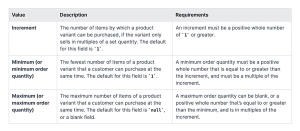
- Volume pricing: – one of the most important aspects of wholesale B2B is the ability to provide volume pricing and it’s coming soon to Shopify (is actually already here for select brands who have early access). You can see the full set of available details here, but the important details on min/max and incremental purchase price setting are in the table below.
- Drake Related drops brand collaborations with Shopify Collective: – although critical reaction to his 2022 album could be well summed up by its own title, Drake appears to have been working slightly harder on his side-hustle. You can read a case study on his collaboration with Shopify here.
- Quick order lists: – if you’re offering multiple variants of the same product as a B2B vendor, you’ll now be able to sell them from the same page, allowing your customers to stock up on a product quicker and helping you to sell more. You can read more about it here.
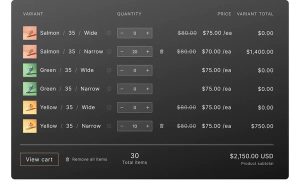
- Curate products to sell with brands you love: – although it’s only available in the US at present, you can guarantee that this will be in Europe sooner rather than later. If you’re a vendor, you can select products from brands you like to sell on your site, if you’re a manufacturer or B2B brand, you can join Shopify Collective to boost B2B sales. The benefits, according to the card, are as follows:
- Curate new products to give customers more variety.
- Grow your business without paying for inventory and warehousing.
- Save time with automated payments, order syncing, and inventory management.
- Automations with Shopify Flow: – another shout out for Shopify Flow here, this time linking to a help centre page on the company location created trigger, though the card itself promises that Shopify’s native automation can now ‘effortlessly assign terms, send invoices, and more”. This is, however, exclusive to Shopify Plus vendors.
- PO Numbers: – a nice, simple one. You can now add and review purchase orders on B2B orders.
- Wholesale migration tool: – something that will come as a welcome addition for B2B brands that have been operating outside of the Shopify B2B ecosystem, you are now able to easily migrate wholesale orders and customers to B2B on Shopify with no requirement for code or dev time. In fact, Shopify has built a mini-course to guide you through the process.
- Paypal payments on B2B: – Shopify is now allowing B2B vendors to offer payment and even buyer credit through PayPal on their B2B stores (UK and US only for credit). You can find out more about it here.
Manage Your Money
It seems to be a common trend for tech companies to drift into finance – Apple, for instance, is now looking likely to become one of the largest banking organisations in the world following collaboration with Goldman Sachs, for example, while Amazon has taken steps to enter finance in India.
It should be no great surprise, therefore, to see a business card announcement in the latest Editions (in partnership with Celtic Bank). However, though it’s far from the largest section, there are several new announcements in the finance category – raising the question: how far will this go?
- The business card that works as hard as you: – as mentioned above, Shopify has revealed a new line of business credit cards in partnership with Celtic Bank. Interest and fee free, this should prove an attractive offering for US merchants.
- Get up to 5 additional accounts, integrate with more accounting software and easily transfer funds: – all words that will please users of Shopify Balance (though new updates are US only). You will be able to:
- Transfer funds to and from Balance without leaving the admin.
- Simplify taxes through integration with QuickBooks®.
- Separate cash for sales tax, payroll, or bills with 5 additional accounts.
- A new option to securely store credit cards for easier conversion: – in a move that will reduce friction for purchases, customers will be able to save credit card information to your store to speed up repeat purchases. Although not available yet, you can sign up for early access, and you should – this is a nice win for merchants looking to grow revenue from repeat customers. Unfortunately, however, the service will only be initially available to enterprise merchants.
- Pay expenses your way: – this may be a genuine game-changer for a lot of merchants (and the freelancers that invoice them). No matter the size of your business, one of the worst things is the slow creeping cost of your tech stack – whether the tools are for measurement or management, they seem to replicate and soon you can end up requiring varying levels of expertise in dozens of them. Being able to manage payments (and integrate with accounting solutions) takes some of this pain away and will be welcomed by businesses and creditors alike.
- More restricted categories: – Shopify has been consistent in its approach to being a platform available for anyone (it’s gotten them into a spot of bother on multiple occasions), but Shopify Payments has not been so egalitarian. That is slowly changing, it seems, as the platform is now offering a waitlist for merchants in the topical CBD, tobacco, pharma, and sexual wellness sectors.
- Block fraud before it happens: – this is both another native addition to Shopify of a previously app reliant process, but also another step into financial services and a sprinkling of machine learning into the mix, ticking a good number of the trends in this Editions. The highlights for the tool feature:
- 10B+ transactions trained by machine learning
- 99.7% acceptance rate on Shopify orders
- $13B+ Transactions with free chargeback protection.
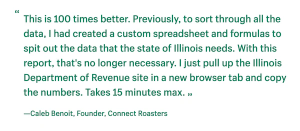
- Enhanced US sales tax report: – first announced at the end of June, this will be welcomed by any business operating in the US. If you’ve not been selling in the US, it’s easy to underestimate the almost ludicrous complexity of the US tax system for ecommerce businesses – but thankfully it just got that little bit easier to conquer the states thanks to this new reporting tool. One testimonial given in the announcement blog states the following:
Orders & Fulfilment
Orders and fulfilment are the tricky areas in this Editions, Shopify completed its sale of Deliverr (a company it only acquired in May of 2022) as Lütke wrote, in a note to staff, that building a logistics infrastructure was ‘a side quest’ that had become a distraction. Despite this, Shopify Shipping appears to still be a going concern, and there are, continuing the trend established so far, more native shopify releases that enter into spaces controlled by companies in its app ecosystem.
There’s no denying, however, that a company the size of Shopify can demand concessions that individual merchants cannot – and having them negotiate the cost of shipping labels will be a big help for US merchants. However, in addition to the new native options, they have also maintained another trend – they have added new or improved APIs and accesses to facilitate the building of custom solutions.
- Ship orders faster: – as mentioned above, Shopify saving time for US merchants with various bulk purchasing options, analytics tools and scheduling options. The announcement carries the following four key points:
- Bulk purchasing of up to 100 shipping labels now available.
- Automatic package suggestions will help decide on label sizes.
- Shipping expenses are trackable through new shipping analytics.
- Shipments can be managed via the enhanced shipping labels page, letting you schedule pickups, void and print multiple labels.
- Smart order routing now in full release: – first announced back in July (though competing with a far superior solution from, oh… Velstar!) Shopify have released ‘smart order routing’ which will ensure orders are dispatched from the closest fulfilment location.
- Streamline inbound inventory with purchase orders: – as mentioned in the B2B section, you can now add purchase orders to help with tracking and admin of stock. While B2B POs are for outgoing stock, this is for incoming orders, allowing you to better monitor stock levels and predict stocking requirements from the Shopify platform.
- Element Brooklyn Ships Orders Faster and for Less With Smart Order Routing: – a nice case study of Element Brooklyn’s use of Smart Order Routing. Some great numbers reported, including a 1.2 day reduction in the average delivery time to a $1.14 average saving in shipping costs per order. Imagine the results that could be achieved with a superior solution! (Okay, I’ll stop now).
- Save money with reduced rates from DHL Express and Shopify Shipping: – again, mentioned in the intro, Shopify has partnered with DHL to offer US customers up to 80% discounts on shipping labels. Combined with smart shipping solutions, merchants could shave a huge amount off their annual costs.
- Make handling returns easier by setting up rules: – allowing you to avoid dealing manually with every customer return, Shopify has begun allowing merchants to set up automated rules based on store policy, though merchants will need to activate self-service returns in their store, they will then be able to define the return window (14, 30 or 90 days, Unlimited or Custom), handling shipping costs (free, flat rate, or state the customer is responsible for return cost), setting a restocking fee (a possible % reduction in refund amount), and identifying final sale items (non-returnable, such as perishable, custom, or personal care items). You can also create a written return and refund policy that can be displayed to customers. Although a fantastic addition for merchants, it’s worth considering your returns policy carefully as it can impact sales.
- View delivery status for every order: – merchants will now be able to see the status of all orders from the order screen, they’ll also be able to search for orders by delivery status, product name or SKU. This will no doubt be a major bonus for the purpose of complaint handling and, with regular reporting, for customer satisfaction.
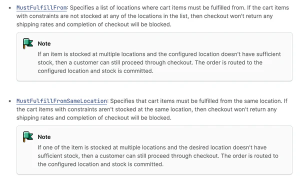
- Create order routing rules with the Order Routing API: – not only has Shopify provided their own smart order routing, they have provided API access to developers to build custom rules for implementation. Whether you need to prioritise certain dispatch locations (warehouses over stores, for example), ensure it comes from the closest location within a country rather than geographically, or deprioritise a location once a set maximum order volume is reached, developers can set these rules using the API.
- Customize fulfillment and delivery with the Fulfillment Constraints API: – developers will now be able to set fulfilment constraints that will block order completion if they are not met. The linked page provides the following currently supported constraint types.
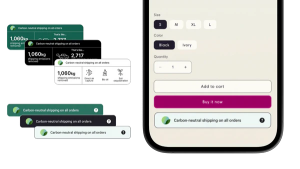
- Offer carbon-neutral shipping on all orders: – enhancements to the Planet app will now allow merchants to provide better visibility of their commitment to carbon-neutral shipping, this card claims. Providing two further pieces of information:
- Merchants can customise their badge to better fit their branding and display unique stats about how their business is contributing to fighting climate change.
- Merchants can add an impact page to include pre-populated images and videos that illustrate their work to reduce and remove carbon emissions.
- Easily split and merge fulfillments: – whether it’s to split orders with delayed or out-of-stock items, or merge multiple orders from the same customer to reduce the number of deliveries, this self-fulfilment option will allow for greater flexibility and efficiency for merchants without a fulfilment service. You can read more about the options for manual and automated rules on the linked to ‘Fulfilling your own orders’ page.
- Snarky Tea brews success with Shopify Shipping: – a case study from back in April shows how Snarky Tea used Shopify Shipping to save in excess of $305,000 per year in shipping.
Everyday Operations
Many of the announcements in this section fall under the identified nativisation trend – with Shopify attempting to better display data, streamline location and site management and, overall, increase the amount of the process of managing a commerce business that can be done from the platform itself.
There is an issue here – one that has been present in all tech and electronics. It can often be the case that the more things an appliance or application tries to do, the less well it is able to do them. While it’s possible for a brand investing quite so much in its functionality to develop workable solutions, it’s unlikely that first generation releases will be capable of supplanting existing third party offerings for all but entry level merchants.
-
- A new, uplifted design for the admin: – as these things are, it’s been met with near universal condemnation (if YouTube and Reddit comments are to be believed, so pinches of salt required), but along with Editions, a new admin UI was introduced, with Shopify stating that there were:
- Design updates to display data and content more clearly and make interactivity more obvious, while improved fonts, icons, and higher information density make the new UI more practical, efficient, expressive, and approachable.
- An improved settings system should make it easier to navigate and find the content you need.
- A new, uplifted design for the admin: – as these things are, it’s been met with near universal condemnation (if YouTube and Reddit comments are to be believed, so pinches of salt required), but along with Editions, a new admin UI was introduced, with Shopify stating that there were:
Efficiently manage your multi-store organisation: – organisation settings will now be available in the admin section, according to this panel. Allowing you to:
- Navigate, access and search for stores in the account menu.
- Add, suspend, remove, or manage user roles and access.
- Review stores and their status, create new stores from an existing store.
- Pay one consolidated bill for your entire business.
- View and track performance at the both business-wide and individual store levels.
This is one of a number of updates aiming to make multi-store management that little easier, and no doubt ties in to their push to make international expansion and B2B sales a user friendly process and, therefore, Shopify a more attractive platform for enterprise businesses.
Benchmark key metrics against similar businesses: – This, from back in April, should be a hugely popular addition to anyone taking measurements of a Shopify store. Although the chances are it’ll need some honing (what counts as a similar business or similar merchant?), the chance to benchmark your business will help to make better decisions. The current metrics available for benchmarking are:
- Online store conversion;
- Average order value;
- Retention rate;
- Time to fulfil, ship, and deliver orders.
Experience an easier to use admin: –
Although the new UI has met with mixed reviews, this panel announced that they have improved key features of the admin to “make them easier, faster, and more efficient”. These updates include:
- Making it easier to manage tags and view information with adjustable column widths in the bulk editor.
- Improving search, making it faster, smarter, and easier to filter (you can now search orders, apps, products, and settings across stores.
- Store data should now be more prominent, clear, and accessible on desktop and mobile, to generate accurate and relevant insights.
- The alerts feed has been updated to make it easier to understand and identify alerts.
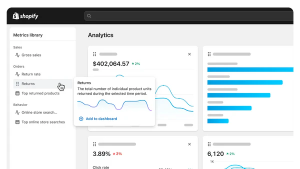
Customize your reporting and analytics: –
Changes to the analytics view are another set of updates that have met with mixed reviews. However, this card details how you can now tailor your analytics dashboard to meet your business needs. This is possible by:
- Customising your analytics overview dashboard to show the metrics that matter most, reorder metrics cards, add or remove them, and save your view.
- Filtering the cohort analysis report by first order attributes (sales channel, marketing channel, etc.) and include specific customer criteria.
Bring data from other surfaces into ShopifyQL Notebooks: –
“ShopifyQL Notebooks now supports the ability to incorporate Python code blocks into existing and new Notebooks. This will allow you to retrieve data (via http request), combine it, and visualize it within Notebooks using some of the most powerful data libraries available.”
Using Python version 3.10.2 ShopifyQL just got a whole lot more powerful. This panel offers the following instructions in a linked topic:
- Once in the app, in a new or existing notebook, you can add new Python code blocks.
- After adding the code block, you can type the code, or select from a pre-built template.
- Alternatively, you can use the reference Notebook titled “Lesson 3 – Working with Python code blocks!” which includes pre-built templates as examples.
Discover the right apps for your exact needs: –
This card again dives into some of the latest updates to the Shopify App Store, which should make finding “new and powerful apps for your unique business needs even easier”.
- The Built for Shopify badge means an app has met Shopify’s standards for quality and performance.
- Reviews are now sorted by relevance and quality.
- Personalised recommendations will show in your admin, including reminders to uninstall apps that aren’t being used.
- Apps that extend checkouts, POS, and other admin areas are easier to find.
- App editorial guides will now let you exploit what apps successful businesses are using.
Simplified navigation and product creation on mobile: –
Streamlining operations through the mobile experience has been another of the core improvements on offer in this Editions and this card emphasises the ease with which you can manage your business from your phone. You can now:
- Add new product media with ease and use the consolidated media picker to activate your camera or upload photos.
- Make products sellable by adding a price and configuring products, while options and variants flow make it easier to set up your products.
- Access a list of stores to add and switch between, including tools for adding accounts and logging out.
- Get easy access to key commerce functions, apps, and channels with a reimagined overflow menu.

Conclusions
In tens of thousands of words, hours of video, the direction is reasonably clear, there is the step up in both competition with and collaboration with Amazon (which will make the upcoming monopoly investigation into Amazon that little extra spicy – as it may provide Shopify with a chance to start taking a larger slice of the ecommerce pie). There is additional movement in the B2B space, meaning that Shopify is aiming to conquer an arena that Amazon is absent from quickly and there is the early adoption of AI which has both allowed the platform to provide a new kind of customer service to entry level merchants, but also provide unique customisation opportunities that are not (yet) present on other ecommerce platforms – especially at the SME level.
While the changes underway are not likely to see share price recapture pandemic heights, they have likely secured the steady growth that investors will have been looking for. Which bodes well for brands using the platform, who can look forward to continued investment from Shopify in new additions to their toolkit, backend and website operation.